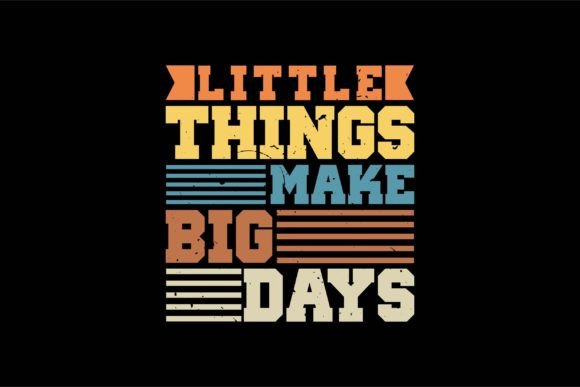
Little Things Make Big Days: A Designer’s Review
When I first pulled up the file for Little Things Make Big Days, my immediate reaction was a quiet appreciation for its retro, wavy energy. As someone who spends hours scrutinizing stitch paths and evaluating how digital graphics translate into physical thread, I don’t get excited by every new download. But this one? This one has character. It isn’t just another generic motivational quote slapped onto a vector; it feels like a mood. The groovy typography and fluid lines suggest a design that is meant to be felt as much as seen.
I approach every machine embroidery design with a critical eye, asking myself: "Will this hold up in the real world?" Will it look cheap after three washes? Will the lettering blur into an unreadable mess on a curved surface? Today, I’m taking Little Things Make Big Days out of the digital void and putting it through the paces of actual production. Whether you are an Etsy seller looking for your next bestseller or a crafter making a heartfelt gift, here is my honest breakdown of how this design performs when it hits the hoop.
First Impressions: Mood and Visual Personality
The visual personality of Little Things Make Big Days is undeniably nostalgic yet fresh. The wavy, distorted text gives it a 70s vibe that resonates strongly with current trends in handmade apparel. When I look at the layout, I see a design that begs to be placed on soft, comfortable fabrics. It doesn’t scream for attention like a bold graphic tee might; instead, it whispers. It invites the wearer to slow down.
This is where the distinction between a simple T-Shirt Designs category item and a true piece of art comes into play. The curves in the lettering require careful handling during digitization. If the stitch density is too high, those waves will pucker. If it’s too low, the fabric texture will show through unevenly. From what I can see in the preview files, the balance seems intentional. It suggests a lighter touch, which means this design is likely perfect for delicate projects where you want the emotion to shine through without overwhelming the garment.
Real-World Application: Where Does It Fit?
Let’s talk about practical use cases. I recently imagined using Little Things Make Big Days for a custom order—a set of personalized baby onesies for a gender-neutral nursery shower. The retro font pairs beautifully with pastel threads, creating a vintage-inspired look that parents love. Because the phrase is uplifting but not overly sentimental, it works for any age group. However, the "baby" angle is strong because it speaks to the small moments of parenting.
Beyond baby items, I see this design thriving in the realm of home decor. Imagine an embroidered patch applied to a linen kitchen towel or a tea towel. The wavy lines mimic the flow of water or steam, adding a subtle artistic touch to everyday objects. For the craft business owner, this is a versatile asset. It transitions easily from custom apparel to embroidered patch applications, allowing you to market the same design across multiple product categories.
I also envision this working well on tote bags. A canvas tote with Little Things Make Big Days stitched in earthy tones (mustard, olive, terracotta) creates a cohesive, bohemian aesthetic. It’s the kind of bag someone would carry to a farmers market or a coffee shop, serving as a walking billboard for positive vibes. For the small shop product line, this adds variety without requiring a complete redesign of your brand identity.
Technical Considerations and Potential Pitfalls
No review is complete without addressing where things can go wrong. While Little Things Make Big Days is visually appealing, it demands respect from the embroiderer. Here are the areas where you need to be careful:
- Hoop Size and Stability: Because the design relies on smooth curves, it needs a stable base. If you are stitching this on a stretchy knit fabric like a sweatshirt, ensure you are using a high-quality cut-away stabilizer. Without it, the waves may distort as the fabric stretches under the tension of the needle.
- Fabric Texture: Avoid heavily textured fabrics like bouclé or thick chenille. The fine details of the wavy letters may get lost in the nap of the fabric. Stick to smooth cottons, linens, or blends for the clearest result.
- Thread Contrast: The design’s charm lies in its readability. Using low-contrast thread colors (e.g., light gray on white) will mute the effect. Choose threads that pop against your background to maintain the integrity of the typography.
- Dense Stitch Areas: If the design includes dense fill stitches around the letters, be cautious on thin fabrics. Excessive stitching can cause puckering, especially on the edges of the curves. Always test on scrap fabric first to gauge the necessary pull compensation.
Impact on Product Value and Brand Consistency
For the commercial embroidery professional, the quality of the design directly impacts perceived value. A sloppy execution of Little Things Make Big Days could make a $30 tote bag look like a $5 impulse buy. However, executed well—with clean satin stitch borders and proper running stitch accents—it elevates the entire product.
This design fosters customer trust because it looks professional. Buyers on platforms like Etsy are savvy; they can tell the difference between a mass-produced print and a carefully stitched piece. When you present a finished product that shows attention to detail, you justify higher price points. The retro theme also taps into a specific aesthetic community, increasing the likelihood of social media shares and organic engagement. People love sharing their purchases if the design is visually striking and meaningful.
Practical Notes for the Embroidery Designer
Before you add Little Things Make Big Days to your production queue, keep these tips in mind:
- Test First: Never assume a design will work perfectly on your machine. Run a test on the exact fabric and stabilizer combination you plan to use.
- Check Licensing: Ensure you have the commercial rights to sell finished items made from this digital embroidery file. Some designs are for personal use only.
- Mockup Wisely: Use printable mockups to visualize how the design looks on different garments. Compare light and dark backgrounds to ensure versatility.
- Inspect Details: Zoom in on the digital file. Are there tiny corners that might break the needle? Are the curves smooth? If the source file is an EPS format, check the vector paths for any jagged edges before converting to embroidery software.
Final Verdict
Little Things Make Big Days is more than just a Graphics asset; it’s a mood booster that translates beautifully into thread. It offers a blend of nostalgia and modern appeal that fits seamlessly into a wide range of products, from holiday embroidery gifts to everyday personalized gifts. Its success depends largely on your technical execution—choosing the right fabric, stabilizer, and thread colors—but when done right, it produces a stunning embroidery project that customers will cherish.
If you are looking to expand your design assets with something that feels warm, inviting, and professionally crafted, this design deserves a spot in your library. It reminds us that even small details, like a well-stitched quote, can make a big difference in our daily lives.