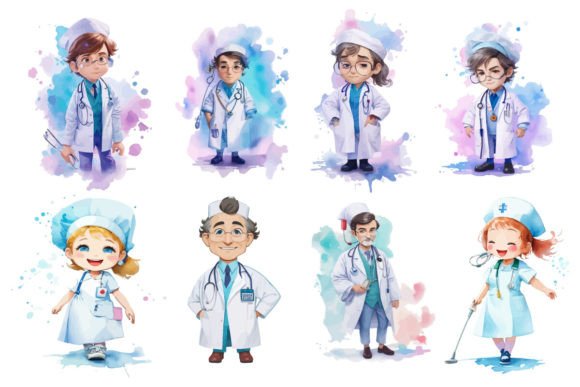
Doctor Day Design: A Designer’s Embroidery Review
As a designer who spends half my life staring at stitch counts and the other half trying to convince clients that embroidery isn’t just for towels, I approach every new asset with a healthy dose of skepticism. We’ve all been there: you buy a machine embroidery design because it looks stunning in the digital preview, only to find out it falls apart when the needle hits the fabric. That is why I treat every review as a practical stress test. Today, I am evaluating Doctor Day Design, a collection that specializes in custom cartoon illustrations using watercolor techniques. While the product description hints at versatile themes ranging from Halloween to Christmas, my focus here is on how these illustrations translate into physical graphics for real-world projects.
The first thing you notice about Doctor Day Design is its mood. Watercolor techniques in embroidery are notoriously tricky. They rely heavily on subtle color transitions and soft edges, which can easily turn into muddy blobs if the stitch density is too high or the thread choice is wrong. However, this collection seems to lean into the whimsical nature of cartoons, which actually works in its favor. The shapes feel loose and organic, forgiving of the slight imperfections inherent in hand-guided or even automated machine work. It feels like a design meant to bring joy, not precision engineering. This makes it an excellent candidate for personalized gift items where emotional resonance matters more than technical perfection.
Real-World Application: From Screen to Stitch
Let’s talk about a specific scenario. Imagine you are preparing a batch of custom embroidered tote bags for a local craft fair. You want something that stands out against the sea of standard monograms and geometric patterns. You pull up Doctor Day Design. The cartoon aesthetic immediately grabs attention. Because the style is illustrative, it pairs beautifully with canvas or cotton blends, materials commonly used for tote bag design projects. The watercolor effect, achieved through careful thread colors and perhaps some running stitch variations, adds a layer of sophistication that elevates the item from a simple accessory to a piece of wearable art.
I also envision this design shining on baby clothes. The soft, rounded lines of a cartoon illustration are gentle on the eyes and appropriate for nursery decor or baby blankets. When applied to baby embroidery projects, the lack of sharp, aggressive angles ensures the design feels safe and cuddly. Customers browsing Etsy for unique onesies or bibs are often looking for that "soft" look, and Doctor Day Design delivers exactly that. It bridges the gap between digital design assets and tangible comfort.
For the small business owner, versatility is key. The mention of holiday themes like Christmas and Halloween suggests that this bundle could be a year-round revenue stream. A Christmas-themed cartoon character rendered in watercolor style could be adapted for sweatshirt embroidery during the winter months, while a spooky-but-cute theme could work for October. This flexibility allows an Etsy seller or craft business owner to keep their inventory fresh without constantly hunting for new digital embroidery files.
Where Caution Is Required
However, no design is perfect for every surface. As an experienced reviewer, I must highlight where Doctor Day Design might struggle. Watercolor styles often depend on negative space and delicate details. If you attempt to stitch this on a curved surface like a cap or hat, the distortion can ruin the illusion of the watercolor wash. The perspective will warp, making the cartoon character look stretched or squashed. For such custom apparel, a flatter, more graphic style usually yields better results.
Similarly, textured fabrics pose a challenge. If you are working with heavy denim or bouclé wool, the fine details of the illustration may get lost. The needle might catch on the fibers, leading to skipped stitches or a messy finish. In these cases, a robust applique design or a bold fill stitch pattern would be more reliable. Also, be mindful of dark fabrics. Watercolor effects often rely on light threads to create highlights. On black or navy material, you may need to add a substantial underlay or use white base layers, which increases the stitch density and bulkiness of the final finished product.
Another area to watch is small hoop sizes. If you plan to create an embroidered patch or a tiny logo for a corporate uniform, check the smallest dimensions of the design elements. Cartoon illustrations can sometimes contain intricate background details that become indistinguishable when scaled down. Always inspect small details before committing to a production run. If the design includes tiny lettering or decorative accents, ensure they are large enough to be read after stitching.
Technical Considerations for the Discerning Maker
Before you load Doctor Day Design into your machine, there are several practical steps to ensure success. First, always test the design on scrap fabric. This is non-negotiable. It allows you to see how the thread colors interact with your specific fabric choice. Does the blue blend into the green? Do the reds pop? You might need to adjust your palette or swap out certain threads to achieve the desired watercolor effect.
Review the stitch density carefully. High-density areas can cause puckering, especially on lightweight fabrics like jersey or thin cotton. If you are working with stretchy fabric, use a proper stabilizer—likely a cut-away stabilizer for garments that will be worn frequently—to prevent distortion over time. For home decor items like pillow covers or tea towels, a tear-away stabilizer might suffice, but always err on the side of caution.
I also recommend testing the design in black and white mockups. This helps you evaluate the contrast and composition without being distracted by color. If the design lacks clarity in grayscale, it might struggle to hold visual impact in full color. Additionally, confirm whether the design works for both personal and commercial projects. Many digital product sellers assume they have commercial rights, only to face legal issues later. Check the licensing terms explicitly. If you are creating a small shop product to sell, you need assurance that you are allowed to distribute the finished goods.
Visual Appeal and Brand Consistency
From a branding perspective, Doctor Day Design offers a distinct personality. In a market saturated with minimalist line art and vintage typography, the playful watercolor cartoon style stands out. It signals creativity, warmth, and approachability. This is valuable for brands targeting families, children, or creative hobbyists. The consistency of the style across different themes (Halloween, Christmas, etc.) allows you to build a cohesive brand identity. Your customers will recognize your products by the distinctive artistic flair.
The handmade presentation of these designs also plays a role in customer trust. When buyers receive a product that clearly shows care in execution—where the stitch density is even and the colors are vibrant—they are more likely to leave positive reviews and return for future purchases. A well-executed embroidery project tells a story of quality. It suggests that the maker took the time to select the right materials and settings.
Furthermore, consider the giftability of the final product. A custom embroidered item featuring a charming cartoon illustration is inherently giftable. It feels personal and thoughtful. Whether it’s a holiday gift for a child or a wedding gift for a newlywed couple, the design adds an extra layer of sentimentality. This emotional connection drives engagement and word-of-mouth marketing, which is crucial for any creative entrepreneur.
Final Thoughts
Doctor Day Design is not just a collection of images; it is a toolkit for creating emotionally resonant handmade products. Its strength lies in its ability to soften complex ideas into accessible, cute visuals. For designers and makers willing to put in the prep work—testing fabrics, adjusting threads, and respecting the limits of the medium—this design set offers immense potential. It fits seamlessly into the workflows of apparel decorators, crafters, and makers who want to produce items that are not only functional but also delightful to behold.
Remember, the best embroidery comes from understanding both the tool and the material. Use Doctor Day Design to explore new themes, experiment with color palettes, and connect with your audience on a deeper level. Just keep those scissors ready for the test swatches, and happy stitching!