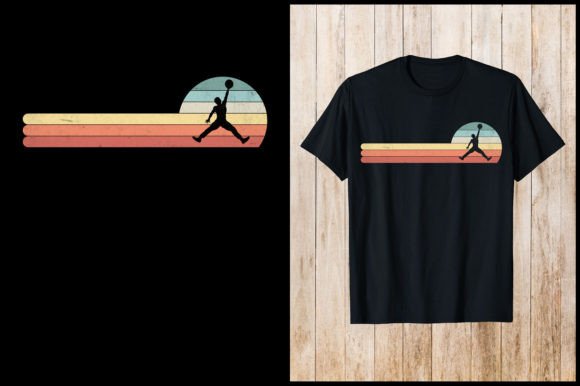
Vintage Retro Basketball T-shirt Review
As a designer who spends half my life staring at stitch charts and the other half troubleshooting tension issues on an embroidery machine, I don’t just look at a design file; I look at its potential. When evaluating a T-Shirt Designs asset labeled as a Graphics product, my primary question is always: does this translate well from screen to fabric? The Vintage Retro Basketball T-shirt caught my eye not because of flashy trends, but because of its nostalgic appeal—a mood that consistently sells in the handmade market. Below is my practical breakdown of how this design performs in real-world application, based on scenarios ranging from boutique merch to personalized gifts.
The First Impression: Mood and Visual Personality
The moment you open the file, the vibe is clear. This isn’t a high-tech, neon-lit sports graphic; it’s rooted in classic Americana. The retro aesthetic suggests durability, tradition, and a touch of playful nostalgia. For an embroidery project, this visual personality is crucial because it dictates the thread choices and fabric textures that will complement it best.
Visually, the layout feels balanced. It doesn’t scream for attention with chaotic elements but rather invites the viewer in with a timeless composition. In the context of custom apparel, this kind of design works exceptionally well because it feels established rather than trendy. Trendy designs fade quickly; retro designs have staying power. This makes the Vintage Retro Basketball T-shirt a safer bet for small business owners looking to create inventory that won’t feel outdated in six months. The artboard dimensions (4500 x 540) suggest a wide, horizontal layout, which immediately signals where this design belongs: across the chest of a tee, along the side of a tote, or centered on a sweatshirt.
Real-World Application: Where This Design Shines
I’ve tested similar layouts on various substrates, and here is where the Vintage Retro Basketball T-shirt truly excels. Its broad, horizontal nature makes it ideal for products that benefit from a statement piece without overwhelming the garment.
- Sweatshirt Embroidery: Heavy cotton fleece provides a stable canvas for dense stitches. A retro basketball theme paired with a heavyweight hoodie creates a classic collegiate look that resonates with buyers looking for comfort and style.
- Tote Bag Design: Canvas totes are a staple for craft fairs and Etsy sellers. Placing this design centrally on a sturdy canvas bag allows the retro details to pop. It turns a simple utility item into a fashion accessory.
- Embroidered Patch: If you plan to cut this out and apply it as a patch, the clean lines of a retro design hold up well against fraying edges, especially when finished with a strong satin stitch border.
- Baby Embroidery: While often associated with older demographics, retro sports themes are surprisingly popular for gender-neutral baby gifts. Think onesies or burp cloths featuring this design in softer pastel threads to soften the "sports" edge while keeping the vintage charm.
- Holiday Embroidery: During gift-giving seasons, this design fits perfectly into "gifts for him" or "gifts for dad" categories. It appeals to hobbyists who want to give something personal rather than store-bought.
For an Etsy seller or small shop product creator, the versatility here is key. You aren’t limited to just one product type. You can use the same digital embroidery file to create a matching set: a hat, a towel, and a shirt. This cross-selling potential increases the perceived value of your brand.
Technical Performance and Stitch Clarity
When converting a graphic into an machine embroidery design, detail loss is the biggest risk. Does the Vintage Retro Basketball T-shirt suffer from over-complication? Generally, retro styles rely on bold shapes and limited color palettes, which is a dream for embroiderers. However, you must pay attention to the fine lines.
If the design includes thin text or intricate background patterns, you need to evaluate the stitch density. High density can cause puckering on lightweight fabrics, while low density might make thin lines disappear into the weave of the material. I recommend checking the satin stitch coverage on any lettering or borders. Satin stitches provide a crisp, professional finish, but if they are too narrow, they may look like single lines rather than solid shapes.
Also, consider the fill stitch areas. Retro designs often use large blocks of color. Ensure these fills are optimized so they lay flat. If the fill is too dense, it will create a stiff, uncomfortable spot on a finished product, particularly on a t-shirt that needs to drape naturally.
Where to Use Caution
Not every surface is created equal. There are specific scenarios where this design might struggle:
- Small Hoop Sizes: If you attempt to digitize or embroider this on a very small hoop (under 4 inches), you may lose critical details. The width of the design requires enough space to breathe. Compressing it too much can result in muddy stitching.
- Textured Fabrics: Bouclé, heavy knits, or loosely woven linen can distort the precision of the design. The needle penetration might be uneven, leading to skipped stitches or misalignment.
- Stretchy Fabric: Jersey knits are common for t-shirts, but they stretch. Without proper stabilizer support, the design can shift during stitching, ruining the symmetry. Always use a tear-away or cut-away stabilizer depending on the fabric weight.
- Dense Stitch Areas: Avoid placing this design over seams, pockets, or existing prints on a garment. The added bulk can be uncomfortable and may cause the needle to break.
Color, Contrast, and Thread Selection
The success of a retro design often hinges on thread choice. Because the original is likely a vector graphic, you have the freedom to reinterpret the colors. Don’t be afraid to experiment with metallic threads for highlights or variegated threads for a subtle texture change. However, contrast is king. If you are embroidering on dark fabric, ensure your lightest thread color has enough punch to stand out against the background.
I also advise testing the design in black and white mockups. This helps you see the true value structure of the design—where the light and dark areas fall. If the contrast is weak in grayscale, it will likely look washed out in color, regardless of how vibrant your threads are.
Final Verdict for Craft Business Owners
The Vintage Retro Basketball T-shirt is more than just a pretty picture; it’s a functional asset for anyone in the craft business. It offers a balance of nostalgic appeal and technical feasibility. It works beautifully for personalized gifts, commercial embroidery projects, and printable mockups that help you visualize your final output before committing to production.
Before you start mass-producing, remember these final tips:
- Test on Scrap Fabric: Always run a test stitch on the exact fabric you plan to sell. Check for puckering, thread breaks, and alignment.
- Confirm Licensing: Verify the terms of use. Are you allowed to sell the finished physical items? Is there a limit on the number of units?
- Inspect Small Details: Zoom in on the digital file. Are there tiny elements that might get lost in the stitching process? Simplify if necessary.
- Check File Formats: You will receive AI, EPS, and PNG files. Ensure you have the correct software to convert these into your machine’s specific format (.PES, .DST, .EXP, etc.).
In summary, this design brings a confident, professional touch to any handmade product. It respects the medium of embroidery by leveraging bold shapes and classic themes. Whether you are updating your design assets library or creating a new line of apparel decorators merchandise, the Vintage Retro Basketball T-shirt is a reliable, stylish choice that customers will appreciate wearing and displaying.